




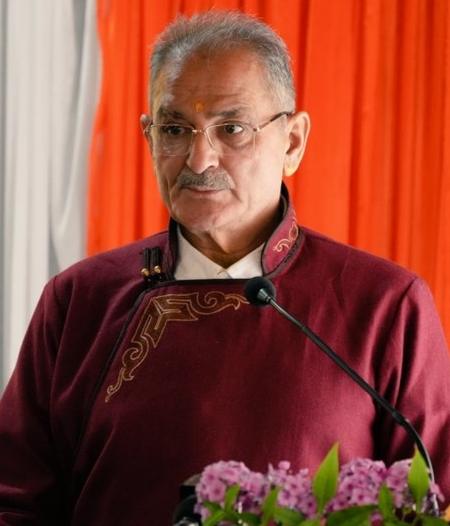
Kavinder Gupta to occupy Shimla’s historic Barnes Court where Indira–Bhutto signed Simla Agreement

In a moment rich with historical symbolism, Kavinder Gupta, who will soon take oath as the 23rd Governor of Himachal Pradesh, is set to become the first person from Jammu and Kashmir to reside in Shimla’s iconic Barnes Court—the very building where one of the most significant agreements in the history of India-Pakistan relations was signed. Gupta, who is currently Lt. Governor of Ladakh, will be sworn as HP’s Governor on 10 March.
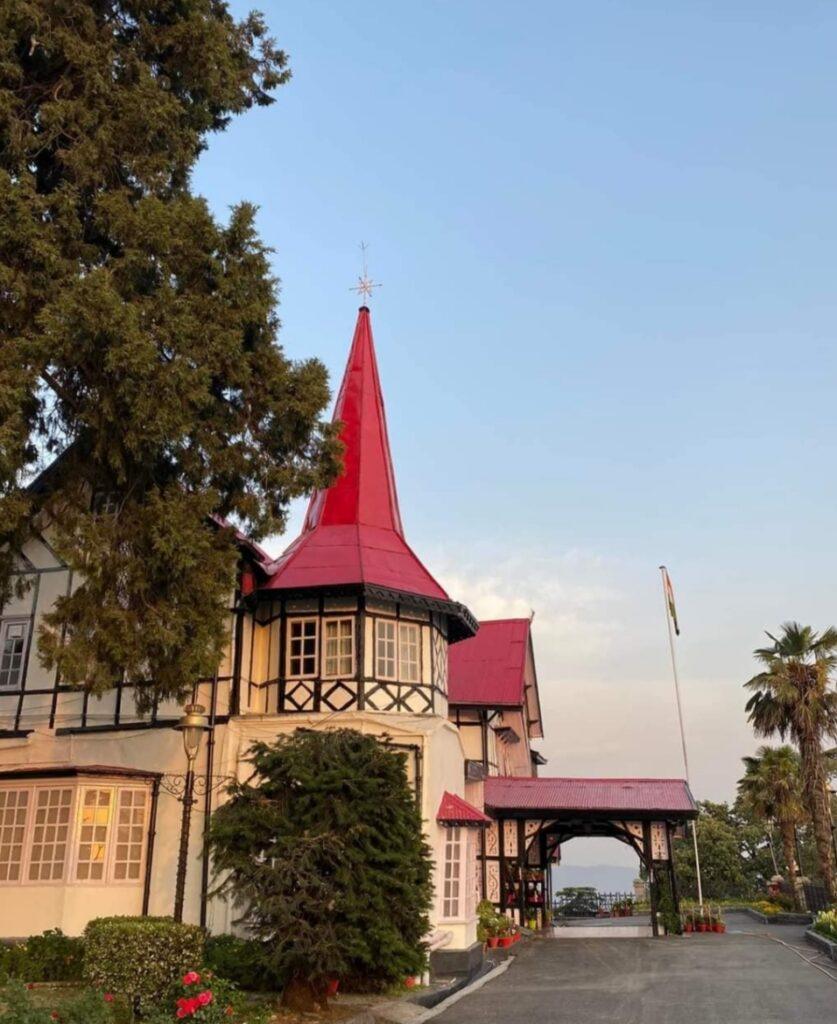
Now known as the Raj Bhavan or Lok Bhavan, the colonial-era Barnes Court gained global prominence in July 1972 when Indian Prime Minister Indira Gandhi and Pakistan’s President Zulfikar Ali Bhutto signed the historic Simla Agreement following the Indo‑Pakistani War of 1971.
Gupta’s arrival at the historic residence carries particular resonance for Jammu and Kashmir, as the agreement fundamentally shaped the region’s geopolitical framework. The accord converted the ceasefire line established after the 1971 war into the Line of Control, which continues to divide the territories administered by India and Pakistan in Jammu and Kashmir. It also committed both countries to resolve their differences through bilateral dialogue—an approach India has repeatedly cited in rejecting third-party mediation on the Kashmir issue.
A Hall That Witnessed History
Within Raj Bhavan, the ground-floor “Kirtikaksh” (Summit Hall) preserves the exact setting where the agreement was signed. The glossy wooden table, placed on an elevated red platform and protected by brass railings, remains a focal point of the hall. A plaque on the desk marks the spot where the pact was concluded in the early hours of July 3, 1972, though official documents date it July 2.
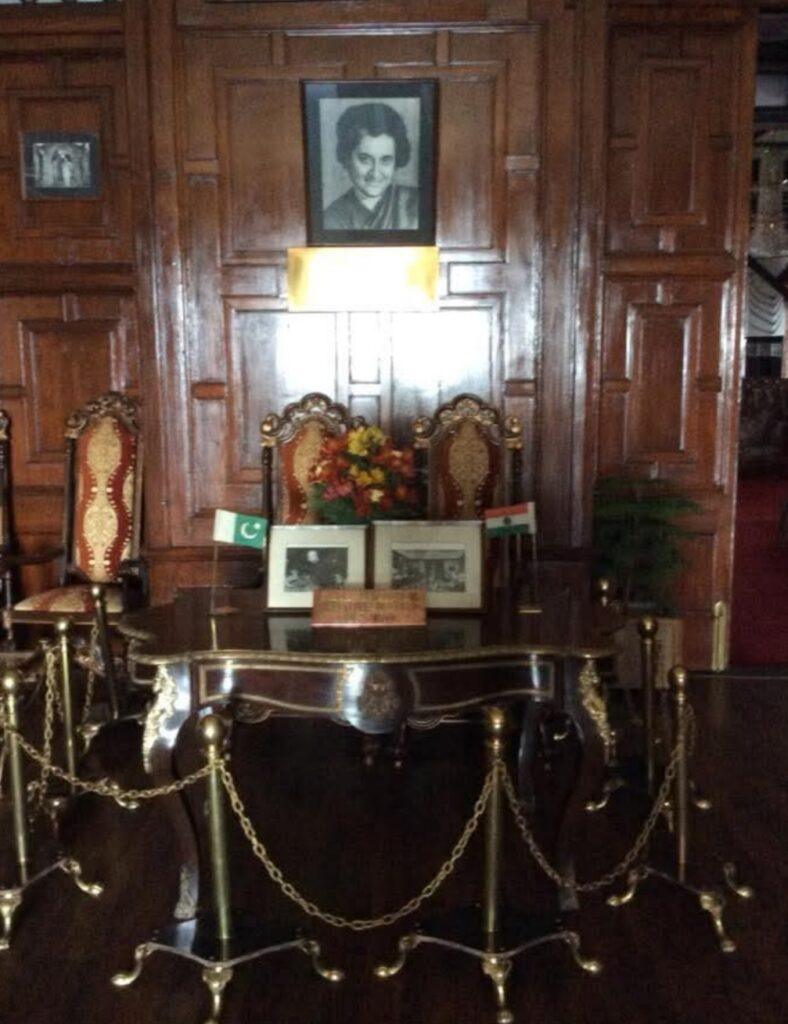
Photographs of the 1972 India-Pakistan summit line the walls behind the historic table, capturing the moment when Indira Gandhi and Bhutto formalised the agreement. The chairs used during the signing remain in place, turning the hall into a living museum of diplomatic history.
Bhutto had travelled to Shimla with his daughter Benazir Bhutto, who was then a teenager and would later go on to become Pakistan’s prime minister.
Symbolism in Changing Times
The Simla Agreement not only paved the way for Pakistan’s diplomatic recognition of Bangladesh, but also became the cornerstone of India’s position that disputes with Pakistan—including Jammu and Kashmir—must be resolved bilaterally.
In recent years, the agreement has once again come into focus amid tensions between the two neighbours. After India suspended the Indus Waters Treaty following the Pahalgam terror attack in 2025, Pakistan responded by announcing the suspension of the Simla Agreement in April 2025.
At Raj Bhavan in Shimla, the historic table where the accord was signed still stands as a reminder of that diplomatic milestone. While the Indian flag remains placed beside the desk, the Pakistani flag that once stood there has been removed.
A Unique Historical Link
With Kavinder Gupta set to occupy Barnes Court as Governor, history appears to have come full circle. For the first time, a leader from Jammu and Kashmir—the region whose future was deeply shaped by the Simla Agreement—will reside in the very building where that landmark accord was sealed more than five decades ago.
Barnes Court
Built in 1932 the heritage timber-framed British-era Barnes Court, now used as the official residence of the Himachal governor, in Shimla, is named after Edward Barnes, the commander-in-chief of British India.
Lord Napier, Sir Colin Campbell and Sir Hugh Rose were among the residents of this historical building during the British-era.