

LG Saxena pitches Ladakh’s development model before PM Modi-led NITI Aayog

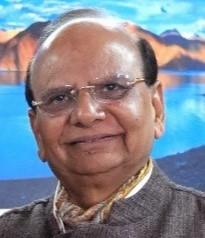
Lieutenant Governor of the Union Territory of Ladakh, Vinai Kumar Saxena, today attended the 11th Governing Council Meeting of NITI Aayog in Delhi, chaired by Prime Minister Narendra Modi, and highlighted the transformative developmental initiatives being undertaken in Ladakh.
Addressing the meeting, Saxena stated that Ladakh has witnessed a new momentum of development since becoming a Union Territory in 2019 and has made significant progress in infrastructure, tourism, education, renewable energy, water security, agriculture and governance under the leadership of Prime Minister Narendra Modi.
The Governing Council of NITI Aayog is the apex body for fostering cooperative federalism and evolving a shared vision of national priorities and development strategies with the active participation of States and Union Territories. The forum is a key platform to discuss development issues, speed up the implementation of national priorities, and strengthen Centre-State collaboration.
Emphasising water security as one of the Administration’s highest priorities, Saxena highlighted the launch of Project Him Sarovar, under which small water reservoirs are being created in 50 villages to harvest snowmelt and glacial meltwater. Five reservoirs have already been completed, while the target is to create 100 such water bodies by next year.
He also showcased the innovative Rock Check Dam initiative, under which eco-friendly check dams are being constructed using locally available riverbed stones without cement, concrete or steel. The first such structure, inaugurated at Upshi in May 2026, has created a pondage area capable of storing more than 40 million litres of water. Four additional rock check dams are proposed in the coming weeks.
Tourism sector, Saxena noted, continues to be the backbone of Ladakh’s economy. He highlighted the successful exhibition of the Sacred Relics of Lord Buddha, which attracted over 1.18 lakh visitors and positioned Ladakh as an emerging eco-spiritual tourism destination. He also highlighted the growth of astro-tourism through India’s first Dark Sky Sanctuary at Hanle, along with the promotion of sports tourism through the Ladakh Sports Policy 2025, Khelo India Winter Games and modern ice hockey infrastructure.
Speaking about economic empowerment initiatives, Saxena informed that an agreement signed with the Lulu Group for the export of 1,000 metric tonnes of apricots has opened new market opportunities for Ladakhi farmers. He further noted that milk procurement through the modern Oma Dairy Plant has increased from 1,000 litres per day in 2024 to 8,500 litres per day currently. He also informed the Council about the establishment of a Pashmina Board to promote authentic Ladakhi Pashmina in national and international markets.
Highlighting environmental conservation efforts, Saxena spoke about the Indus River Green Corridor Initiative, under which extensive plantation drives are being undertaken along the Indus River. He reiterated the Administration’s target of increasing Ladakh’s forest cover from less than one per cent to five per cent over the next two years. He also informed the Council about efforts to rejuvenate nearly 800 acres of barren land in Leh by utilising excess freshwater from the Igoo-Phey Canal.
On border area development, Saxena informed the Council that work has commenced on developing Chumur as Ladakh’s first Model Border Village under the Vibrant Village Programme. He also highlighted the preparation of Ladakh’s first comprehensive Master Plan in collaboration with the School of Planning and Architecture, Government of India, to ensure planned and sustainable urban development.
Saxena further highlighted governance reforms undertaken by the Administration, including the launch of Ladakh’s first Unified Ease of Doing Business Portal, which provides 23 online services across 13 departments and has simplified procedures by eliminating cumbersome manual processes.
Referring to tourism sector reforms and deregulation measures, Saxena informed that tourist arrivals in Ladakh between January and May 2026 have increased by nearly 44 per cent compared to the corresponding period last year, while tourist arrivals during May 2026 alone recorded a remarkable growth of 121 per cent.