

Nepal GLOF raises alarm in J&K, Ladakh; retreating glaciers, expanding lakes pose fresh threat

The devastating Glacial Lake Outburst Flood (GLOF) in Tibet that has caused destruction in the downstream Nepal has sounded an alarm for Jammu & Kashmir and Ladakh, where retreating glaciers, swelling glacial lakes and unstable moraine dams are creating a potentially lethal flood threat in the high Himalayas.
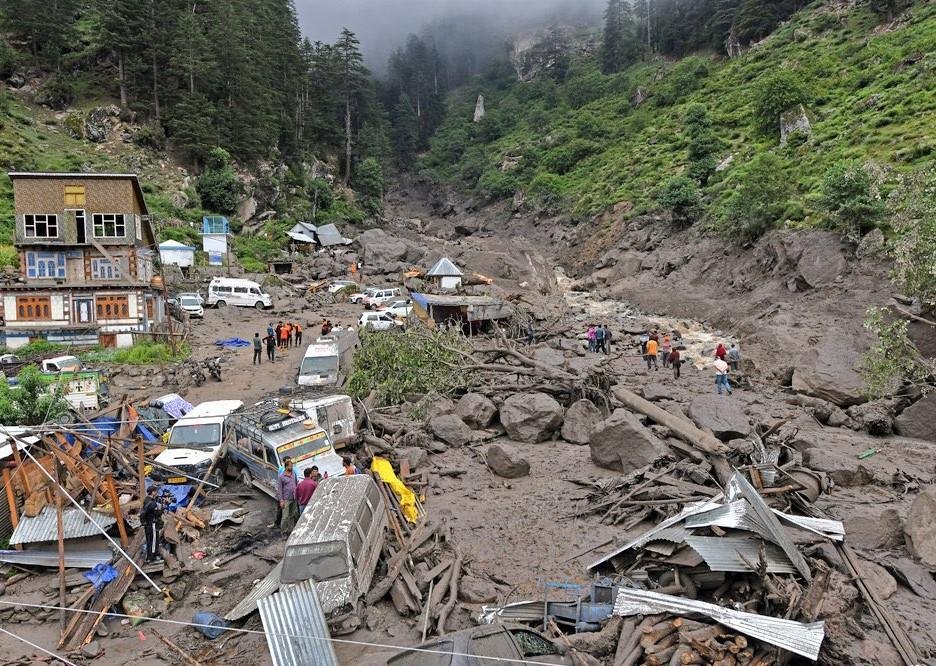
From Kishtwar’s rapidly developing Chenab basin to the glacial lakes beneath Harmukh in Kashmir and the vast high-altitude lakes of Ladakh, experts have warned that a sudden lake breach could unleash torrents of water capable of damaging settlements, roads, bridges and critical infrastructure downstream. Melting glaciers are giving berth to these lakes on mountain tops.
According to an official report, in the Kishtwar district of Jammu alone, several high-altitude areas have been identified as particularly vulnerable, while critical infrastructure—including roads, bridges, schools, hospitals and ongoing hydropower projects such as Pakal Dul, Kiru, Kwar and Dangduru—could face severe damage in the event of a major GLOF. The Kishtwar region is being transformed into the hydroelectric generation hub of India with several dams being built on the Chenab River.
Kishtwar offers perhaps the most painful reminder of what such a disaster can mean. The Chisoti tragedy of 14 August last year claimed 63 lives during the pilgrimage to Machail Mata, with bodies of 60 victims identified but 30 people continuing to remain officially missing. The disaster has intensified questions over the preparedness of vulnerable high-altitude settlements facing an increasingly unpredictable mountain environment.
Lakes such as Mundiksar and Hangu have been classified as high-risk, with the unstable moraine dams holding back their waters vulnerable to sudden failure.
The threat is not confined to Kishtwar. In Kashmir, Gangabal and Nundkol lakes below the Harmukh peak have been identified among the region’s highly susceptible glacial lakes, while Ladakh has recorded multiple GLOF events over nearly two centuries.
In Kishtwar, scientists and officials are increasingly concerned over the formation of new glacial lakes and the expansion of existing ones as glaciers retreat amid rising temperatures.
The issue of glacial lakes in Kashmir was raised in the Assembly where Chief Minister Omar Abdullah referred to a study and said five glacial lakes in the Kashmir Himalaya had “very high susceptibility” to GLOFs.
Ladakh’s spectacular glaciers and high-altitude lakes may be among its biggest natural attractions, but yesterday’s devastating GLOF in Nepal has underlined the darker side of a rapidly changing Himalayan landscape—one where retreating glaciers are creating and enlarging potentially dangerous glacial lakes.
Ladakh has a long history of GLOF events, with documented incidents dating back to 1833 and occurring at several locations including the Shayok Valley, Leh, Domkhar, Nindder, Gya, Phugtal and Achinathang.
Union Minister Dr. Jitendra Singh during the recent session of the Parliament informed the Lok Sabha that a database of more than 2,000 glaciers in Ladakh has been generated using 2020-23 satellite data. Changes in the extent of more than 1,000 glaciers for over two decades were mapped.
An inventory of 3219 glacial lakes of area greater than 0.25 hectares has been generated for Ladakh as part of the National Hydrology Project of the Ministry of Jal Shakti. Glacial Lake Outburst Floods risk modelling has been done for high-risk lakes, including Katkar and Suru in Ladakh, he added.