
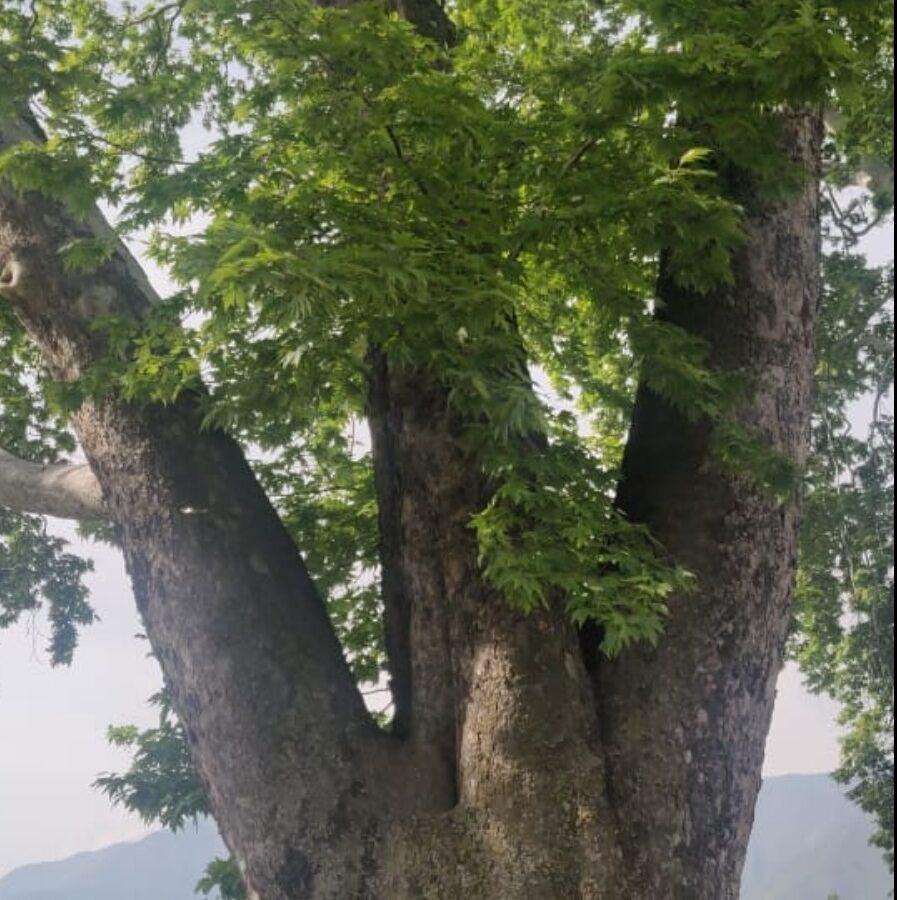
Kashmir’s iconic Chinars must not become casualties of development: EPG

The Chinar conservation debate has gained momentum in Jammu and Kashmir, with Environmental Policy Group (EPG) Convener Faiz Bakshi warning that the Valley’s iconic trees must not be sacrificed in the name of development following Chief Minister Omar Abdullah’s reported remarks on their felling in Ganderbal.
Calling the chinar a living emblem of Kashmir’s identity, Bakshi said its cultural, historical and ecological value far outweighs the convenience of removing it for road-widening projects. He urged the government to demonstrate its commitment to environmental protection through concrete measures, including alternative alignments, design modifications and making tree felling the last resort.
Bakshi said government commitments to environmental conservation must be reflected in decisions on the ground, particularly when dealing with mature Chinars that have taken decades to grow. He called for a thorough reassessment of projects involving their removal, stressing that better roads and environmental preservation need not be competing goals if alternatives are explored before irreversible decisions are taken.
The issue has triggered following the recent visit of Omar Abdullah to his assembly constituency Ganderbal where he called for a balanced view towards development as many Chinar trees were hindering widening of roads in the area. The problem is when ever authorities start cutting them, people who can’t even find Ganderbal on the map start raising hue and cry, he reportedly added.
Bakshi said “Chinar is not just another tree standing along a road. It is a living symbol of Kashmir’s heritage, history and cultural identity. For generations, these magnificent trees have defined the Valley’s landscape. Their value cannot be measured merely in terms of the space they occupy or the convenience they offer to road-widening projects”.
He pointed out that the government’s commitment to environmental conservation must be reflected in its decisions on the ground. While improved roads and infrastructure are necessary, the removal of mature chinars should not be treated as an inevitable consequence of development without first exploring alternatives.
Bakshi said the chinar, locally known as “Bouin” holds immense cultural, historical and ecological significance in Jammu and Kashmir. The tree is deeply rooted in the region’s traditions and landscape, while its expansive canopy provides shade, supports biodiversity, absorbs carbon and helps regulate local temperatures. Mature trees take decades to develop, and newly planted saplings cannot immediately replace their ecological benefits.
“It is contradictory that, on one hand, the government talks about environmental protection, while, on the other, the cutting of chinars is presented as a necessary price of development. Environmental commitments must translate into concrete action,” he said.
The EPG Convener clarified that the Group does not oppose development but believes that infrastructure projects must incorporate environmental safeguards. He urged the government to explore alternative road alignments and design modifications and undertake proper assessments before approving the felling of mature trees.
Bakshi also said public concern over chinar conservation, including from people outside Kashmir, should be welcomed rather than viewed as an objection to development.
“The concern expressed by people from Mumbai and elsewhere reflects the wider recognition of Kashmir’s natural heritage. The chinar belongs to our history and identity, and protecting it is our collective responsibility,” he said.