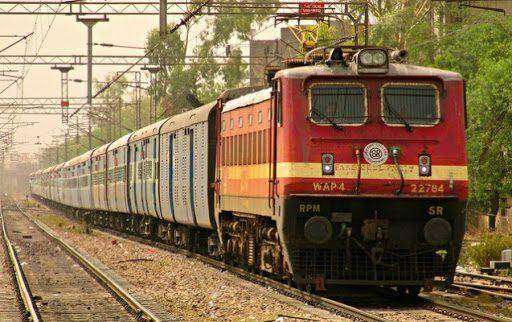
The Jammu Division of Northern Railway is achieving historic milestones with new advancements in the field of freight transportation. Freight trains, previously used only for transporting goods such as automobiles, apples, steel, and grains, are now being utilized for livestock transport through parcel vans as part of a special initiative.
A total of 23 exotic breed bulls were transported from Bangalore to Jammu and Kashmir. These valuable animals were safely transported to Kashmir over a long distance via railway parcel vans. This initiative is part of the Breeding Development Program of the Agriculture and Animal Husbandry Department, facilitated by the railways.
As a result, the Jammu Division has achieved another historic feat by transporting the first consignment of exotic breed bulls from Bangalore (Karnataka) to Kashmir, thus facilitating the availability of these animals.
Of these 23 exotic bulls, 6 were unloaded at Bari Brahmana Goods Shed and the remaining 17 at Budgam Goods Shed. This historic transportation is not only significant from a logistics perspective but will also prove to be a game-changer for Kashmir’s dairy economy.
Key Highlights:
This is the first time that livestock has been transported over such a long distance (Bangalore to Kashmir) via parcel vans.
The parcel train, after departing from Bangalore, traversed various states of the country and reached Budgam via the Udhampur-Srinagar-Baramulla Rail Link (USBRL). During the journey, strict standards of the Bureau of Indian Standards (BIS) and special chambers were used for the welfare of the animals, ensuring that the bulls did not suffer any physical harm or stress.
Regarding this special livestock consignment, Senior Divisional Commercial Manager Jammu, Uchit Singhal, stated, “The arrival of these high-quality foreign bulls will improve the local breeds of cattle in Kashmir, leading to a significant increase in milk production capacity. Transportation by rail has not only reduced costs compared to road transport but has also ensured safe and timely delivery even in adverse weather conditions.
This will increase the income of dairy farmers in Kashmir and usher in a new era of the White Revolution in the region. This success demonstrates that Kashmir is now fully connected to the national freight network, which will facilitate the trade of other livestock and agricultural products in the future.
This initiative is a major step towards a ‘Developed India’ and a self-reliant Jammu and Kashmir.”
From south to north by rail: Bulls arrive to script Kashmir’s dairy future