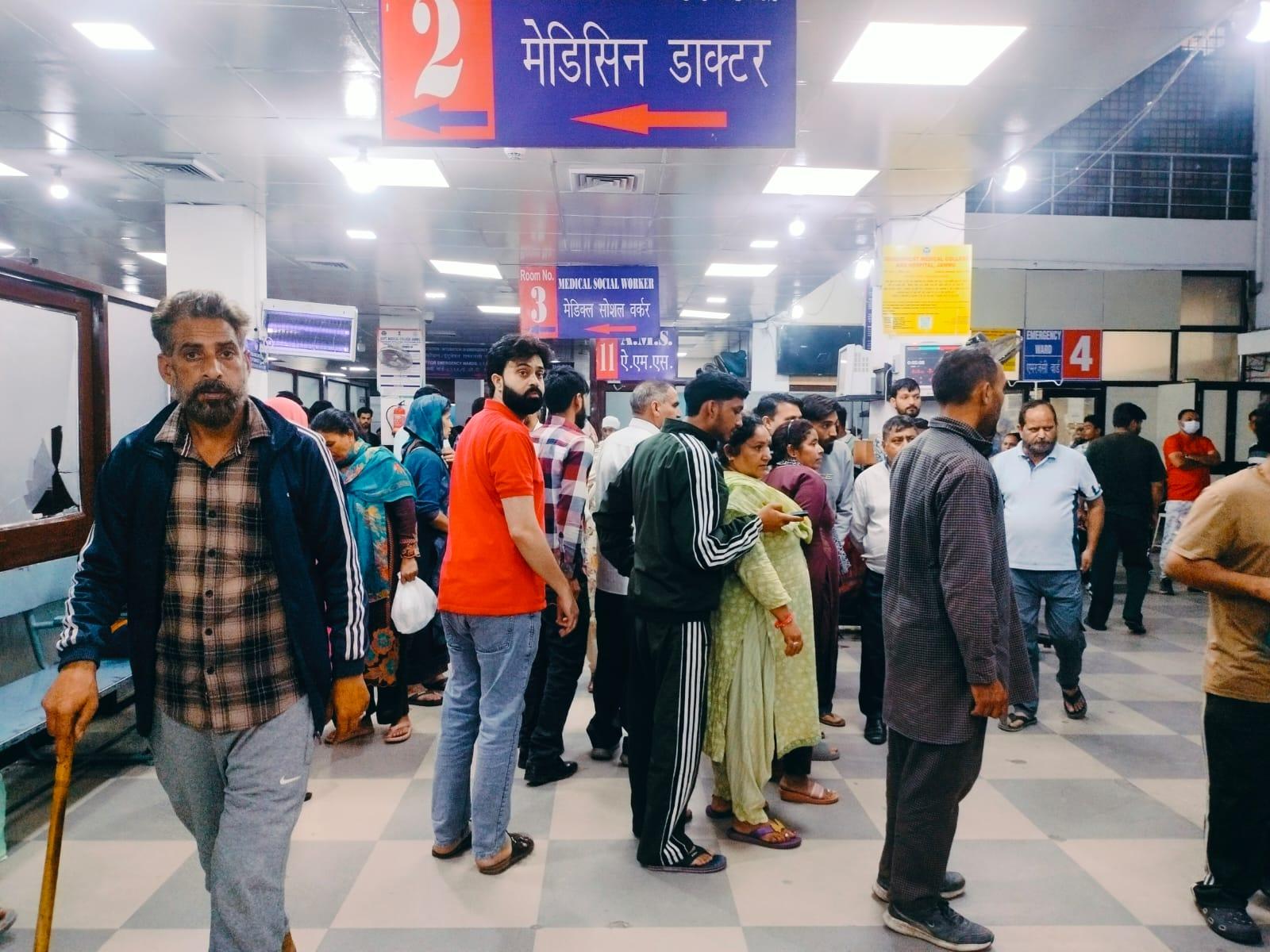
Every day, as hundreds of critical cases pour in and thousands of tests are processed round the clock, the emergency wing of Government Medical College Jammu operates like a high-stakes lifeline—where speed, scale and precision often mean the difference between life and death.
The data released by Dr. Ashutosh, Principal of the Government Medical College (GMC) Jammu, highlights the scale and intensity of operations in its emergency wing for December 2025 and January 2026, underscoring its pivotal role as the region’s primary lifeline for critical care.
The figures reveal that the emergency department at Government Medical College Jammu continues to handle an overwhelming patient load, reaffirming its status as one of the busiest and most crucial healthcare facilities in the Jammu region.
On average, nearly 590 patients visit the emergency daily, out of which around 160 require hospital admission, reflecting the severity and diversity of cases handled at the institution.
The diagnostic workload has also remained exceptionally high.
It conducts over 400 radiological investigations every day, including X-rays, ultrasounds, and CT scans, ensuring timely diagnosis for emergency cases. Even more striking is the laboratory output, with over 6,000 tests conducted daily in the emergency wing alone. Among these, biochemistry tests dominate with more than 4,500, followed by pathology and microbiology examinations.
Surgical interventions in the emergency department are equally significant, with more than 70 surgeries performed daily. The orthopaedic department accounts for the majority, carrying out approximately 60 surgeries each day, highlighting the high incidence of trauma-related cases.
According to the data, the highest number of referrals are made to the medicine department, followed by surgery and orthopaedics. Patients commonly seek emergency care for conditions such as fall-related injuries, chest pain, abdominal pain, respiratory distress, hypertension, stroke, heart attacks, vomiting, and seizures.
The patient distribution remains consistent across all shifts—morning, afternoon, and night—indicating a round-the-clock burden on emergency services. The gender ratio stands at 60:40 (male to female).
GMC Jammu continues to receive referrals from across the region, including other government medical colleges, district hospitals, and peripheral health institutions. Most referrals are made for advanced medical or surgical care, as well as for specialized treatment in fields such as neurology and cardiology.
The data collectively highlights the immense pressure on the emergency infrastructure while also reflecting the institution’s critical role in delivering life-saving care across Jammu and adjoining areas.