

Jitendra Singh calls on J&K scientists, doctors to embrace next-gen medical research

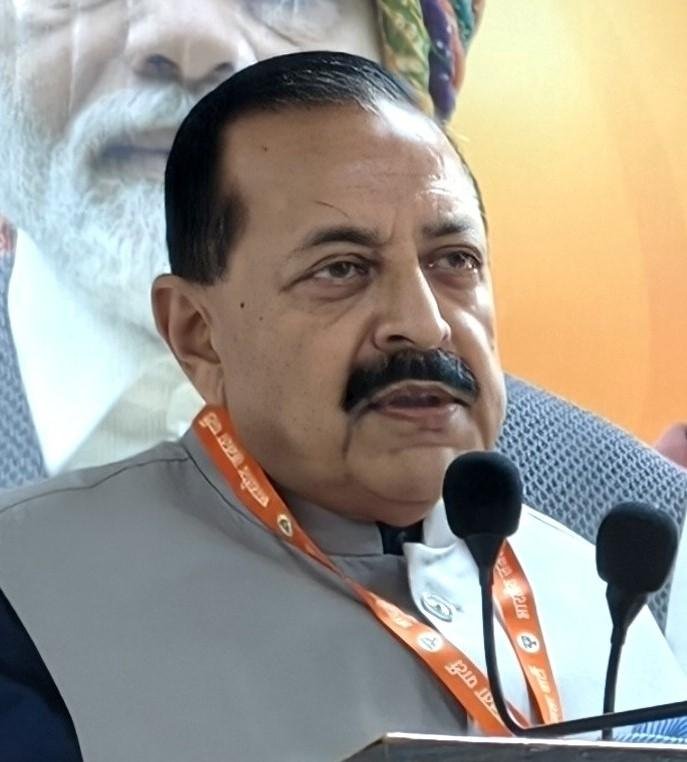
Union Minister of State (Independent Charge) for Science and Technology; Earth Sciences and Minister of State for PMO, Department of Atomic Energy, Department of Space, Personnel, Public Grievances and Pensions, Dr. Jitendra Singh, today said that India is poised to globally lead the next generation of medical practices, with the country making rapid advances across the life sciences and emerging areas of medical research and technology.
Describing the present phase as an exciting time for medicine, Dr. Jitendra Singh said that the emergence of new technologies is opening up new possibilities in healthcare, but the challenge would be to achieve an optimum synergy between technology-driven practices and clinical medicine. He said the future of medical practice would require an optimum synergy between technology-driven practices and clinical medicine, with Artificial Intelligence (AI), genomics, quantum technologies and other emerging technologies opening new frontiers in healthcare.
Addressing the 1st Aarogya Shikhar Samman – A Medical Investiture Ceremony organised by the Jammu & Kashmir Chapter of the International Medical Sciences Academy (IMSA) at Jammu, Dr. Jitendra Singh said AI is proving to be a major boon in several therapeutic and diagnostic procedures. He referred to its ability to reduce the time required for cultures and facilitate gene sequencing, while stressing that technology should not become a substitute for clinical medicine.
Among those felicitated at the ceremony were Dr. Ravinder Madan, Former HoD, Gynaecology; Dr. V.M. Sudan, Dr Yudhvir Gupta former HoD Pathology, Former HoD, Orthopaedics; Dr. C.L. Gupta, Former HoD, Urology; Dr. Rajender Singh, Former Principal, GMC, Jammu; Dr. Bella Mahaja, Former HoD, Microbiology; Dr. Yudveer Gupta, Former HoD, Pathology, GMC Jammu; and Dr. RP Kudyar, Former HoD, Medicine and Endocrinology, Dr Pawan Malhotra Director ASOCHAM and others.
The Union Minister cautioned against a situation where excessive dependence on technology could undermine the clinical sense of the doctor. He said that while technology-enabled options should not be left unavailable, clinical judgement must remain an essential component of patient care. He recalled the traditional emphasis in medical practice on spending adequate time with patients, taking their history and correlating diagnostic findings with clinical observations.
Dr. Jitendra Singh also cautioned against injudicious commercialisation in medical practice and the unnecessary prescription of investigations. He said that prescribing an avoidable investigation could undermine the trust between a doctor and a patient, underlining the importance of combining technological capabilities with sound clinical judgement. Highlighting the wider transformation taking place in the life sciences, Dr. Jitendra Singh said India is now active across a range of emerging fields, including biotechnology, genomics, precision medicine, vaccines, nuclear medicine, nanomedicine and biomanufacturing. He referred to India’s biotechnology policy, Bio E3, covering biotechnology for environment, economy and employment, and said biotechnology is expected to play a major role in the next industrial revolution.
Dr. Jitendra Singh highlighted India’s progress in vaccines and preventive healthcare. He referred to the country’s DNA vaccine for COVID and said it was gifted to 30 countries. He also spoke about the development of two indigenous antibiotics, noting that the active pharmaceutical ingredient was developed in India and that trials were undertaken at the institute in Faridabad.
On genomics and genetic medicine, Dr. Jitendra Singh referred to the India Genome Sequence initiative and highlighted the successful trial in the treatment of haemophilia through a genetic option, with the research published in the New England Journal of Medicine. He said India’s capabilities have evolved to a stage where the country is undertaking trials, research and innovation not merely for its own requirements but also for the benefit of others. He noted that India is now finding remedies not only for diseases originating in tropical regions but also for diseases historically reported in the West.
Dr. Jitendra Singh also highlighted the expansion of India’s bio-economy and the growing support for life-sciences research, ever since PM Sh Narendra Modi took over. He referred to the National Research Foundation and its support for life-sciences projects, as well as initiatives aimed at encouraging greater private-sector participation in research and development. He referred to the initiative of rolling out a ₹1 lakh crore research development innovation fund, with 50 per cent contribution from the private sector and 50 per cent from the government, as an effort to catalyse private-sector participation in research and innovation. The Union Minister also highlighted developments in nuclear medicine, referring to a successful trial in acute lymphoblastic leukaemia at the Tata Institute in Mumbai.
On nanomedicine, Dr. Jitendra Singh referred to research into nano-insulin for oral use and work on nano-bots for targeted breast-cancer nanotherapy, highlighting the possibilities emerging from the application of nanotechnology in medical treatment.He urged both government and non-government institutions in Jammu and Kashmir to become partners in these emerging areas of medical research and innovation. He said financial, technical and infrastructure support is available and encouraged institutions in the region to submit proposals.
Dr. Jitendra Singh said the support available includes financial assistance, technical support, hand-holding and infrastructure, including laboratories and facilities for institutions that approach the government. He urged the medical and scientific community in Jammu and Kashmir to be more forthcoming in submitting proposals so that opportunities could be pursued on the basis of merit.
Highlighting the growing importance of biomanufacturing, Dr. Jitendra Singh referred to Sri Chitra Institute in Trivandrum, which, he said, has moved beyond treatment and medical education into manufacturing and has started producing medical devices of export quality and at a more cost-effective level.
Dr. Jitendra Singh said that with the revolutionary changes taking place across medical science and the life sciences, India is moving towards a position where new practices in medical care can be led by indigenous research, innovation and technology. He expressed the hope that Jammu and Kashmir would not lag behind in this transformation, given its potential and capabilities. He called for a change in mindset and a reorientation and reinvention of approaches towards medicine so that Jammu and Kashmir can participate more actively in the emerging areas of clinical medicine, biotechnology and technology-driven healthcare.
Congratulating the organisers of the 1st Aarogya Shikhar Samman, Dr. Jitendra Singh appreciated the initiative to recognise doctors who have distinguished themselves in their respective domains. He said the award ceremony provided an opportunity to acknowledge medical professionals who have spent a lifetime building their reputation and serving patients.He also acknowledged the demanding professional responsibilities of practising doctors, particularly clinicians, whose workload often increases with seniority as patients seek their personal attention. He extended appreciation to the spouses of practising doctors for the responsibilities and hardships they undertake in managing families and social obligations alongside the demanding schedules of medical professionals.