


LG Saxena leads ambitious land revival project in Leh

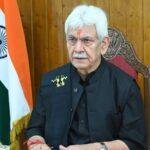
In the wake of an unprecedented pace of land degradation in Ladakh, turning vast expanses of fertile land into barren cold deserts, Lieutenant Governor of UT Ladakh, Vinai Kumar Saxena, has taken up an ambitious project of reversing land degradation and revitalising them into fertile ecosystems.
On the directions of L-G Saxena, nearly 800 acres of barren land have been identified near Spituk village in Leh, for the innovative pilot project. This land has been lying barren for hundreds of years. Under this project, the unutilised or excess water from the adjoining Igoo – Phey irrigation Canal, which was recently restored and operationalized by the L-G, is being spread over this land by creating temporary channels and minor earthwork interventions using tractors and other machinery.
With less than 100 mm of annual rainfall, Ladakh relies heavily on glacial meltwater for survival. But the glacial meltwater, in the early Springs, flows too fast for the soil to absorb enough moisture, causing soil erosion down the valleys and triggering an immediate drop in groundwater recharge and soil moisture, transforming agricultural fields into arid, dusty wastelands.
The idea behind this project is to fundamentally alter the local ecosystem using freshwater and kickstart a transformation – from a degraded environment to a productive one. Letting freshwater sit and percolate, will recharge the depleted groundwater, triggering the growth of natural vegetation, and can enable sustainable agriculture or afforestation. Instead of employing complex, energy and cost-intensive solutions that would only put additional burden on Ladakh’s fragile ecosystem, Shri Saxena has resorted to simple and hyper-local freshwater engineering, while ideating this project.
Freshwater discharge would restore the degraded land by flushing out toxic salts, rehydrating parched subsoils, and dissolving essential nutrients for plant absorption. This initiative aims at achieving a mix of immediate and long-term benefits, including:
Ecological Transformation & Groundwater Recharge: By allowing the fresh water to sit and percolate in the soil, depleted aquifers will be replenished. This will raise the local water table, creating a reliable water source in the surrounding areas.
Vegetation Growth: Barren soils contain dormant seeds that will quickly germinate, when exposed to moisture. Grasses and hardy shrubs are the first to emerge, followed by larger plants, over the period of time.
Soil Binding: Once fresh water allows native vegetation to take root, their newly grown roots, bind the loose, dry soil together, protecting it from wind and water erosion, which primarily cause land degradation.
Soil Desalinization: Flushing barren or heavily salinized soil with fresh water helps wash harmful salts and minerals, deeper into the ground, away from the surface root zones. This would further revitalize the soil and boost the growth of vegetation.
Agricultural & Economic Potential: With restored soil moisture and a reliable source of irrigation, the barren/degraded land can be converted for crop cultivation or livestock grazing.
“This initiative is expected to become a model for sustainable irrigation expansion, improved agricultural productivity and ecological restoration across Ladakh. Nearly 800 acres of barren land are being watered using the excess water from Igoo-Phey Canal, for increasing the moisture content in the soil and triggering a process of natural rejuvenation of the soil,” said LG- Saxena. The initiative is aligned with Hon’ble Prime Minister, Narendra Modi’s call for restoring 26 million hectares of degraded land by 2030.
This project comes after Saxena successfully executed the innovative ‘Project Him Sarovar’ to harness abundant snow for long-term water security by creating small water bodies. Furthermore, the crucial Igoo-Phey Canal, which is designed to irrigate over 4,300 hectares of land across several Ladakh villages, and has been lying unused for several years, has also been successfully restored and operationalised by Shri Saxena on 15 May 2026.