




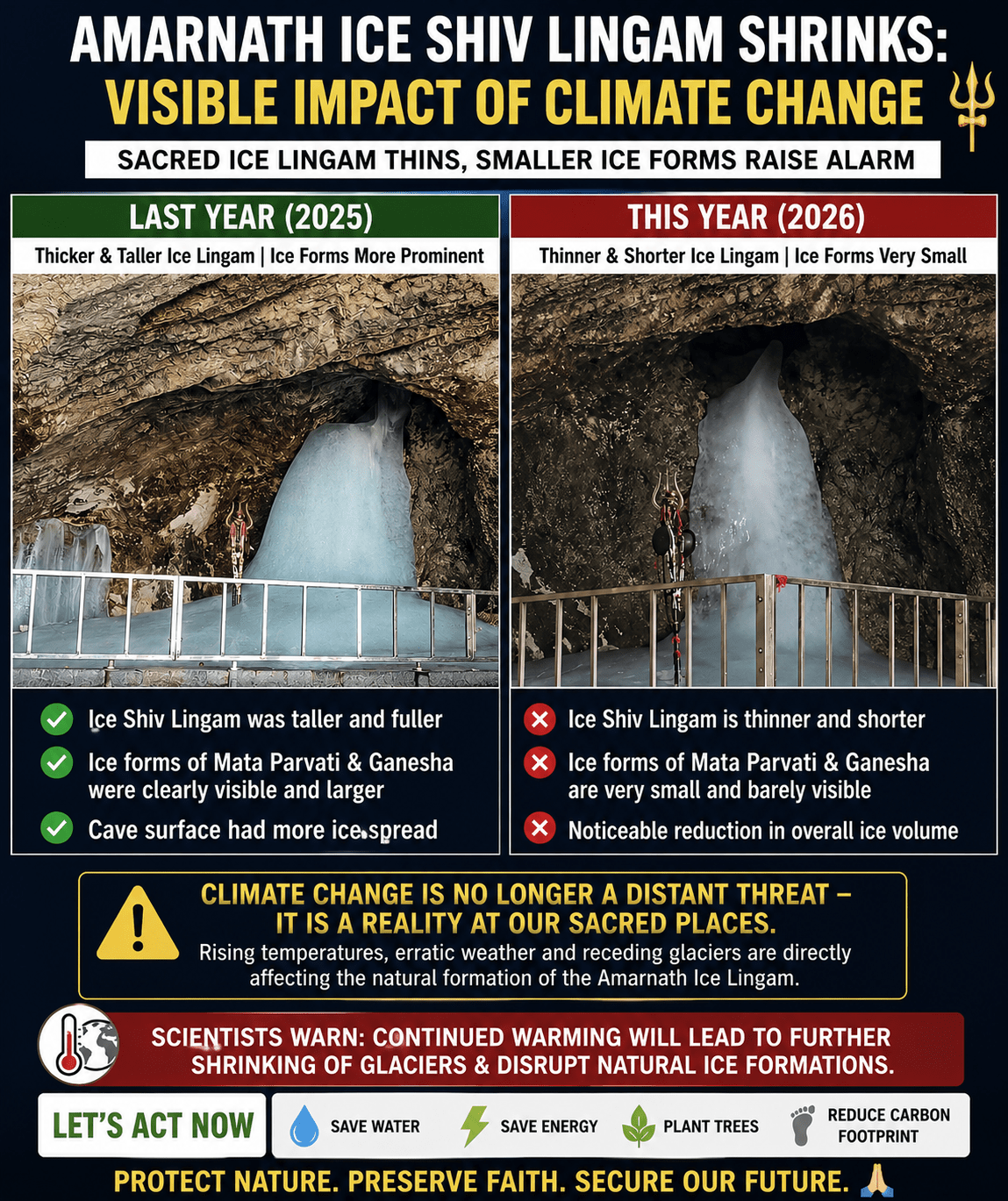
Thinner Ice Shiv Lingam at Amarnath Shrine raises fresh questions over climate change

As the annual Shri Amarnath Ji Yatra formally commenced on Monday with Lieutenant Governor Manoj Sinha performing the traditional Pratham Puja, devotees were greeted by a visibly different sight inside the holy cave.
A comparison of this year’s naturally formed ice Shiv Lingam with last year’s formation suggests a noticeable reduction in its overall size and volume. The 2026 Lingam appears slimmer and less expansive than the one witnessed during the 2025 Yatra.
The smaller ice formations traditionally revered as Mata Parvati and Lord Ganesha also appear significantly reduced in size this year, adding to the visual contrast.
While variations in the sacred ice formation occur naturally every year depending on snowfall, freezing conditions and weather inside the cave, the year-on-year comparison has once again revived discussions on the possible impact of changing climatic conditions in the Himalayas.
Scientists have repeatedly warned that rising temperatures, erratic snowfall patterns and shrinking Himalayan glaciers are altering the region’s delicate cryosphere. Although no direct scientific assessment has linked this year’s smaller Lingam solely to climate change, the visual comparison is likely to intensify calls for long-term monitoring of environmental changes around the Amarnath cave.
As thousands of pilgrims begin their spiritual journey to the Himalayan shrine, the changing appearance of one of Hinduism’s most revered natural symbols also serves as a reminder of the fragile mountain ecosystem and the importance of preserving it for future generations.