


Ladakh approves landmark excise policy; hard liquor sales to begin through retail vends

Breaking away from its restrictive liquor regime, Ladakh has unveiled a sweeping new Excise Policy that expands access to regulated alcohol, opens 20 liquor vends across multiple districts and introduces micro-breweries, with authorities arguing that greater legal availability could help tackle the growing menace of narcotics and spurious liquor.
Lieutenant Governor of the Union Territory of Ladakh, Vinai Kumar Saxena, has accorded approval to the New Excise Policy of Ladakh, which primarily aims to curb the growing dependence on narcotics & drugs and provide people with a wider choice of low alcoholic content liquor in the Ladakh region. The Excise Policy seeks to optimize excise revenue in a transparent, accountable and regulated manner.
The new Excise Policy also marks a significant reform in the excise regime of the Union Territory, introducing a liberalized, transparent, and technology-enabled regulatory framework aimed at balancing public convenience, tourism promotion, revenue optimization, and effective and efficient regulation of the liquor trade.
The new policy comes after extensive meetings with civil society organisations, NGOs, religious organisations, public representatives and government officials, in recent months. One of the major concerns raised in these meetings, was the increasing dependence on narcotic substances and psychotropic drugs, particularly due to the unavailability of hard liquor in Ladakh, prompting individuals to resort to illegal narcotic substances and smuggled and spurious liquor. Representatives of Ladakh Gompa Association, as indeed medical experts in Ladakh, had also suggested expanding the liquor range at authorized vends, to overcome the growing menace of drug abuse. Taking note of the suggestions, LG, Saxena had assured to review the existing excise policy.
Subsequently, a committee of officers was constituted to draft a revised Excise Policy for the Union Territory. The committee examined in detail, the aspects concerning public convenience, prevention of illicit liquor trade, its societal impact, augmentation of excise revenue, transparency in allotment of vends, streamlining of licensing procedures, digitisation of departmental processes and strengthening of enforcement mechanisms.
A key feature of the new excise policy is the liberalisation of the existing restrictive regime, which had resulted in limited availability of brands and outlets, and thus created an “artificial scarcity” that often deterred the tourists visiting Ladakh. This often prompted, tourists to carry liquor with them, from outside the Ladakh region, also causing revenue loss to the UT. The policy seeks to address this “artificial scarcity” by expanding lawful supply channels, while maintaining strict regulatory oversight.
Key reforms approved under the new policy are:
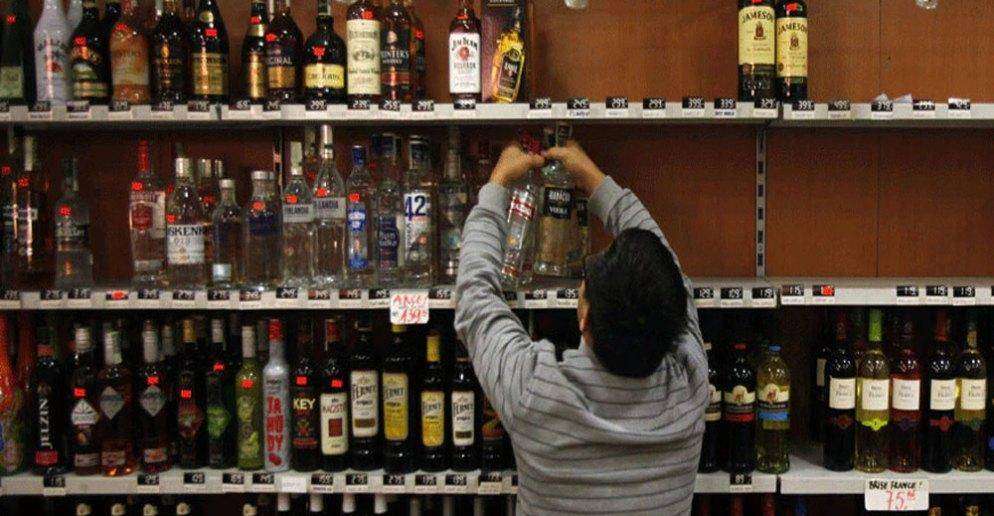
1. Sale of hard liquor, including Foreign Liquor and Indian Made Foreign Liquor (IMFL), is now permitted through retail vends. Earlier, only beer, wine and Ready-to-Drink (RTD) beverages were permitted for retail sale through vends.
2. Excise duty rates have been rationalised for liquor, beer and wine.
3. For the first time, retail vends of liquor have been permitted in guest houses and homestays, on payment of requisite licence fees. Earlier, only hotels were permitted to serve liquor.
4. For the first time, beer bars with micro-breweries are allowed in Ladakh.
5. To improve accessibility and ensure regulated availability, 20 liquor vends will be opened through e-auction. Earlier, only 2 liquor vends were operational in Ladakh.
6. Liquor will now be available in new districts – Nubra, Changthang, Sham and Zanskar, providing greater accessibility to tourists. Earlier, liquor was only available in Leh city.
7. Consumption of liquor is now allowed within the hotel premises including in the rooms. Earlier, liquor consumption was restricted to the bar only.
8. Number of documents required for obtaining excise licence, reduced to just 6. Earlier, 16 documents were required.
9. Requirement of the “Opinion” of District Administration for grant of licence is now removed. Earlier, “Opinion” of District Administration was mandatory and used to take several months.
10. Permission granted to serve liquor on special occasions at private places, after paying requisite fee. Earlier, it was not allowed.
11. Permission granted to serve liquor in banquet halls/ party halls, etc. on specific occasions, after paying the requisite fee. Earlier, it was not permitted.
12. Manufacturers shall now be permitted to undertake wholesale distribution of liquor, thereby, encouraging the availability of quality brands and improving supply chains. Earlier, this provision was not in place.
13. A simplified duty structure has been introduced with a single duty framework at wholesale and retail levels. Earlier, multiple duty structure at the wholesale and retail levels.
14. A uniform excise duty of Rs 500 per LPL has been prescribed across all IMFL brands, to prevent revenue leakage and simplify administration.
In order to optimize the excise revenue, the annual fee for wholesale license has been increased from the existing Rs 3.5 lakh to Rs 5 lakh. The base price for retail vends too, has been revised. The base price in Leh Municipal wards has been fixed at Rs. 60 lakhs, while in other areas, it has been fixed at Rs. 30 lakhs. The Profit margin of retailers too, has been reduced from the existing 12% to 10%.
The new excise policy has effected a major reform by deregulating the existing regime. The requirement of 16 documents for obtaining an excise licence has been reduced to only 6 documents, i.e. PAN, Aadhaar, Incorporation certificate, blueprint of premises, GST/FSSAI/Tourism Registration, whichever is available, and compliance with Rule 18 of the Excise Rules.
Further, in the existing regime, Tourism Registration was mandatory for hotels to get liquor license. But now, only GST registration will be sufficient for getting an excise license. But hotels that are not registered in GST, would be required to furnish FSSAI or tourism registration.
Saxena highlighted that the revised Excise Policy seeks to establish a balanced and pragmatic framework that addresses public concerns, strengthens regulatory oversight, facilitates tourism and economic activity, prevents illegal trade and contributes towards reducing the dependence on narcotic substances, through lawful and regulated channels. Shri Saxena reiterated the Administration’s commitment to ensuring transparency, accountability and public welfare while implementing the policy and strengthening excise administration across the Union Territory.
The Excise Policy also incorporates robust enforcement and consumer protection measures. Stringent penalties, including cancellation of licence and forfeiture of EMD, have been prescribed against retailers selling liquor above the Maximum Retail Price (MRP).
To prevent excise duty evasion and strengthen traceability, manufacturers and importers shall be required to affix security holograms approved by the Excise Department on liquor products. Considering the environmental concerns, the new policy also prohibits sale of liquor in plastic bottles and provides that liquor shall be sold only in approved glass bottles, PET bottles and tin cans.
The new policy prescribes that licensees employ any person above 21 years of age, to assist them in liquor business, thereby, increasing employment opportunities for all.
The policy further provides that retail vends shall be established only after ensuring compliance with prescribed norms relating to 100-meter distance from religious places, educational institutions, hospitals and public parks, in accordance with Government of India guidelines.