




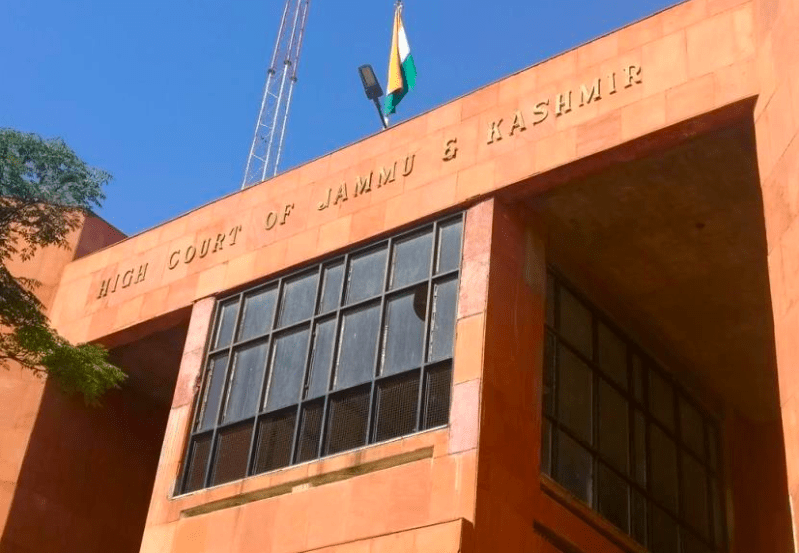
HC pulls up J&K Govt over chronic delays in court replies, accountability drive launched

In a stern message to the administration, the High Court of Jammu and Kashmir and Ladakh has pulled up the J&K Government over the chronic delays in filing official replies in court cases, a practice blamed for increasing pendency and slowing judicial proceedings. The matter has assumed significance with Law Secretary Achal Sethi recently being summoned to explain the recurring lapses.
The strong judicial intervention came during the hearing of Ali Mohammad Wani vs UT of J&K and Ors, where the High Court expressed serious displeasure over the repeated failure of government departments to file objections and counter affidavits within stipulated timelines. Observing that such delays were becoming routine in government litigation, the court said the practice was contributing to mounting backlog and seriously impeding the administration of justice.
In a stern order in April, the court stressed that replies were not being filed “despite repeated opportunities” and called for a time-bound mechanism to ensure prompt transmission of records, timely preparation of replies and fixation of responsibility on officers failing in their duties.
The situation escalated further when the court directed the personal appearance of Commissioner Secretary, Law, Justice and Parliamentary Affairs, Achal Sethi. During the subsequent hearing on May 5, Sethi appeared before the court and assured the bench that the government had initiated corrective measures to prevent recurrence of such lapses.
The court was informed that government counsels had been repeatedly sending reminders and even making telephonic requests to departmental officers for para-wise comments and records, but replies were still not being furnished in time. This, the court noted, was leaving government advocates handicapped in defending cases effectively before courts and tribunals.
Following the court’s sharp observations and Sethi’s appearance, the Law Department issued a sweeping circular warning Officers In-Charge Litigation (OICs), law officers and government counsels that negligence in handling cases would invite strict disciplinary action.
The circular admits that litigation-related instructions issued earlier by the government were “not being strictly adhered to” and that a “casual and lackadaisical approach” by officers was leading to adverse court orders against the government.
Under the new directions, OICs have been made personally responsible for collecting records, preparing para-wise comments, coordinating with government advocates and ensuring replies are filed within deadlines. Law officers have been directed to finalize objections within 30 days, while counsels have been cautioned against seeking unnecessary adjournments.
In one of the toughest warnings issued in recent years on government litigation management, the circular says any negligence, delay or laxity in filing replies before the High Court, Supreme Court or Central Administrative Tribunal (CAT) will be viewed seriously and action taken under service rules against the erring officers.
Meanwhile, it is pertinent to note that courts have, on several occasions, taken a stern view of delays by government officials in filing replies. Both the High Court and benches of the Central Administrative Tribunal (CAT) have, from time to time, ordered the withholding of salaries of senior bureaucrats for failing to comply with court directions.
Some litigants before the CAT have reportedly faced prolonged delays in the disposal of their cases due to the respondent departments’ failure to file timely replies. In one such case before the Jammu Bench of the CAT, the Financial Commissioner, Finance Department, and the Director General (Codes) were recently twice saddled with costs of Rs 5,000 after failing to file their response despite 16 adjournments. Judicial observers have noted that such delays by officers undermine the very objective behind the establishment of the CAT, which was intended to ensure speedy justice for Central and State government employees.