
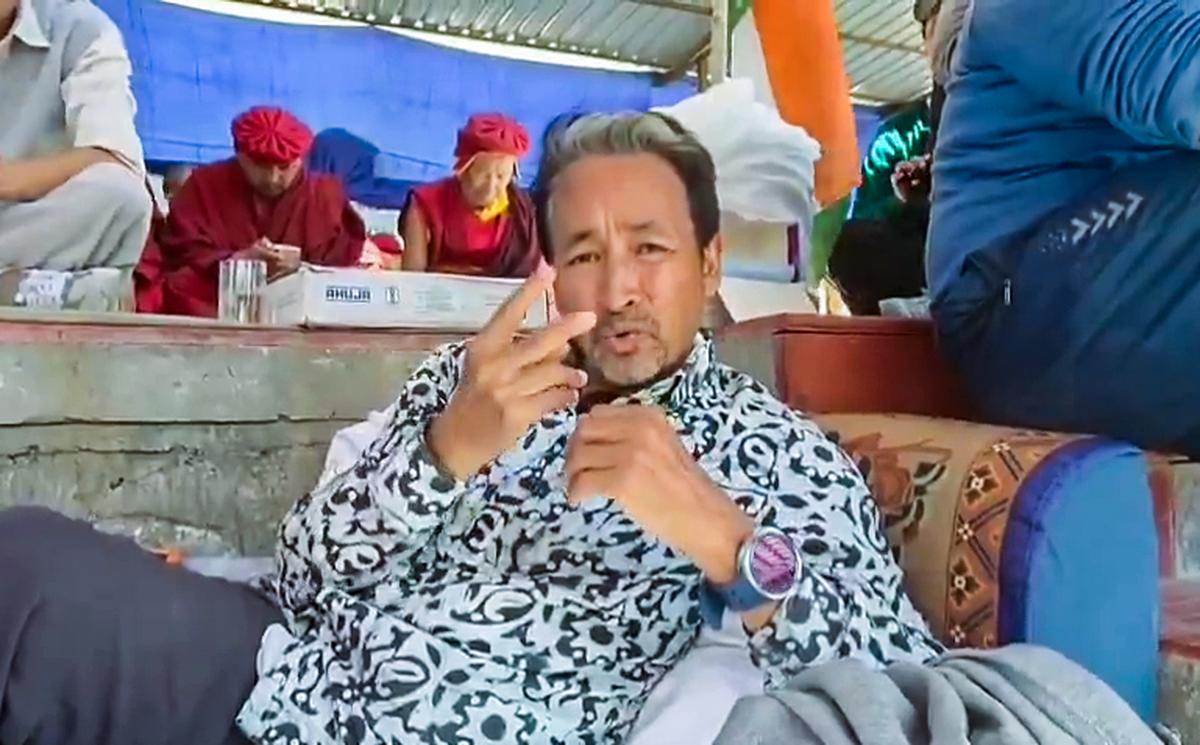
Wangchuk extends support to CJP’s protest against CEC Gyanesh Kumar; Questions delay in judicial enquiry report on Leh firing

Ladakh climate activist Sonam Wangchuk on Sunday backed the Cockroach Janta Party’s (CJP’s) proposed October 2 protest against Chief Election Commissioner Gyanesh Kumar, saying efforts to improve accountability in the country and the electoral process deserved support.
He, however, added that he might not be physically present in Delhi on that day but he supports the CJP on the issue.
In a statement on Sunday, Wangchuk called for the release of the judicial inquiry report into the September 24, 2025 Leh violence, higher compensation for the victims’ families and a review of criminal cases filed against protesters. Wangchuk also questioned his detention under the National Security Act (NSA) and sought wider reforms to prevent the misuse of extraordinary laws.
Wangchuk said the government had constituted a Judicial Inquiry Commission headed by former Supreme Court judge Justice B S Chauhan to examine the events of September 24, 2025. However, nearly a year later, the findings have not been made public.
The protest left four people dead in police firing, while several others were injured and arrested, according to Wangchuk’s statement. He asked why the inquiry had taken so long and sought clarity on who ordered the firing, whether all prescribed crowd-control measures had been exhausted before live ammunition was used, and whether the deaths could have been avoided.
He also criticised the compensation announced by the Ladakh Administration, which includes Rs.15 lakh each for the next of kin of the four people killed and smaller amounts for those injured. Wangchuk said the amount was inadequate and called for a “respectable and dignified” compensation package for the families of those killed, as well as compensation proportionate to the suffering of those who sustained serious or lasting injuries.
After the events of 24 September, the Government constituted a Judicial Inquiry Commission headed by Dr Justice B. S. Chauhan, former Judge of the Supreme Court of India, to examine what happened that day. Almost a year later, Ladakh is still waiting for its findings. People naturally ask: Why is it taking so long? What did the inquiry find? Who ordered the firing? Were all the prescribed stages of crowd control exhausted before live ammunition was used? Why were people hit in vital parts of their bodies? Could these deaths have been avoided?
These are not questions to be answered by rumours, accusations, or counter-accusations. That is exactly why a judicial inquiry was constituted. So let the report come. Let the people know the truth. And if the inquiry establishes wrong doing, then whoever is responsible—however senior—must be held accountable. The longer the report remains unavailable, the more it creates suspicion among ordinary people that inconvenient facts may be getting buried or that those responsible may be protected. The best way for the Government to remove such doubts is simple: bring out the truth, Wangchuk stressed.
Wangchuk also questioned his detention under the National Security Act (NSA). On 26 September 2025, I was detained under one of India’s most stringent preventive detention laws, the National Security Act, and sent to Jodhpur Central Jail. For nearly six months, I remained there. Then, on 14 March 2026, while my detention was being challenged before the Supreme Court, the Government revoked the detention order and I walked free. I therefore ask a very simple question. If I really was such a danger to national security or public order that I had to be taken away from Ladakh and kept under the NSA, then why am I free today? And if I was not such a danger, then who answers for the six months of my life that were taken away? I do not ask this question out of bitterness. Those six months taught me a great deal, he added.