
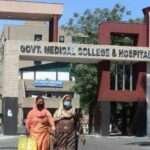




Cancer patients in J&K to benefit from advanced diagnostic services at GMCH Jammu

Government Medical College and Hospital (GMCH) Jammu has taken a significant step towards strengthening advanced cancer diagnostics with the introduction and operationalisation of specialised diagnostic services in Flow Cytometry and Immunohistochemistry (IHC). The initiative aims to enhance diagnostic accuracy, facilitate early and precise classification of malignancies, and support personalised cancer treatment for patients in Jammu and Kashmir.
The services are being strengthened through the collaborative efforts of Government Medical College Jammu, the State Cancer Institute (SCI), Jammu, and Homi Bhabha Cancer Hospital and Research Centre (HBCHRC), New Chandigarh, under the aegis of the Association of Academic and Clinical Pathologists (AACP) and the Jammu & Kashmir Chapter of the Indian Association of Pathologists and Microbiologists (IAPM).
To mark this important advancement, GMC Jammu organised a Continuing Medical Education (CME) programme-cum-workshop titled “Transforming Diagnosis with Immunohistochemistry and Flow Cytometry” on Saturday, at GMC Jammu. The scientific programme was centred on the theme “Diagnostic Pathology in the Era of Precision Medicine: The Evolving Role of Immunohistochemistry and Flow Cytometry.”
The initiative was undertaken under the able guidance of Dr. Ashutosh Gupta, Dean and Principal, GMC Jammu, and Dr. Ashish Gulia, Director-Principal, Homi Bhabha Cancer Hospital and Research Centre, New Chandigarh, with the objective of building institutional capacity, strengthening technical expertise and expanding access to advanced diagnostic facilities.
Immunohistochemistry and flow cytometry are essential tools in contemporary diagnostic pathology and precision oncology. Immunohistochemistry enables accurate tumour characterisation, differentiation of morphologically similar malignancies, and assessment of prognostic and predictive biomarkers that guide targeted and individualised treatment. Flow cytometry plays a pivotal role in the diagnosis, classification and immunophenotypic characterisation of haematolymphoid malignancies, particularly leukaemias and lymphomas.
The integration of these technologies with conventional histopathological examination and molecular testing can significantly improve diagnostic precision and support evidence-based therapeutic decisions. The availability of these advanced diagnostic capabilities at GMC Jammu is intended to strengthen comprehensive cancer care and facilitate access to specialised investigations within the region.
The academic programme brought together eminent specialists from HBCHRC, New Chandigarh, and GMC Jammu for expert lectures, interactive discussions, case-based learning and hands-on training.
The scientific sessions featured Dr. Kinjal Biyani, who spoke on “Driving Precision Diagnostics with High Medical Value Assays,” and Dr. Ravikiran N. Pawar, who delivered a lecture on “Flow Cytometry in Haematological Malignancies.” Further sessions included “Hodgkin Lymphoma: Approach and Differentials,” by Dr. Sankalp M. Sancheti; “Mastering the Pillars of IHC Set-up,” by Dr. Nilay Nishith; and “Immunotherapy in Cancer,” by Dr. Ashutosh Gupta.
An interactive panel discussion on integrated oncology, involving Dr. Sankalp M. Sancheti, Dr. Nadeem Shoket, Dr. Sanjeev Dhingra and Dr. Aditya Mahajan, highlighted the importance of multidisciplinary collaboration in cancer diagnosis and management. The discussion emphasised the need to integrate histomorphology, immunophenotyping, immunohistochemistry and molecular diagnostics to ensure accurate classification and appropriate treatment selection.
A major component of the programme was the conduct of parallel hands-on workshops for scientific and laboratory personnel. Practical training in immunohistochemistry was organised in the Department of Pathology, GMC Jammu, while the flow cytometry workshop was conducted at the State Cancer Institute, Jammu.
The sessions provided practical exposure to laboratory workflows, technical requirements, quality assurance and essential procedures for establishing and strengthening advanced diagnostic services. A dedicated session by Dr. Jitendra addressed the practical requirements for establishing and operationalising a flow cytometry facility.
These training activities are expected to support capacity building among pathologists, laboratory professionals and scientific staff, while promoting standardised practices and reliable diagnostic outcomes.
The programme was attended by senior faculty members, clinicians and medical administrators from GMC Jammu and its associated hospitals. Those present included Dr. Meena Sidhu, Professor and Head, Department of Blood Transfusion; Dr. Sanjeev Dhingra, Professor and Head, Department of Paediatrics; Dr. Rajeev Gupta, Medical Oncologist, State Cancer Institute, Jammu; Dr. Virender Trisal, Medical Superintendent, GMC Jammu; Dr. Dara Singh, Medical Superintendent, SMGS Hospital; Dr. Rehana, Medical Superintendent, Super Speciality Hospital; and Dr. Rakesh Sharma, Medical Superintendent, CD Hospital and Bone and Joint Hospital.
Other senior faculty members in attendance included Dr. Deepti Mahajan, Dr. Sindhu Sharma, Dr. Deepa Hans, Dr. Ameet, Dr. Rajat Gupta, Dr. Deepti Gupta, Dr. Navneet Naz, Dr. Anu Gupta, Dr. Akhtar Salaria, Dr. Priyanka, Dr. Era Hans, Dr. Bhavneet, Dr. Sahil Sachdev, Dr. Kamakshi, Dr. Suby Singh, Dr. Mahima, Dr. Poonam and Dr. Ishani, along with other faculty members and healthcare professionals.
The programme also witnessed the participation of senior and junior residents of the Department of Pathology, undergraduate and postgraduate students, heads of various departments of GMC Jammu and representatives of the institutional administration.
Addressing the significance of the initiative, Dr. Jyotsna Suri, Organising Secretary and Professor, Department of Pathology, GMC Jammu, highlighted that the strengthening of immunohistochemistry and flow cytometry services represents an important advancement in the institution’s efforts to modernise diagnostic pathology and support precision medicine.
She emphasised that access to advanced diagnostic technologies, combined with trained personnel and multidisciplinary collaboration, is essential for improving cancer diagnosis, identifying appropriate therapeutic targets and supporting individualised patient care. She also underscored the importance of continuous medical education and hands-on training in ensuring the effective utilisation of these technologies.
The initiative reflects the continued commitment of GMC Jammu and the State Cancer Institute to academic excellence, innovation, capacity building and the advancement of specialised cancer diagnostics in Jammu and Kashmir.
The introduction and strengthening of Flow Cytometry and Immunohistochemistry services, complemented by scientific collaboration and professional training, mark an important step towards enhancing regional diagnostic capabilities and advancing comprehensive, evidence-based cancer care.